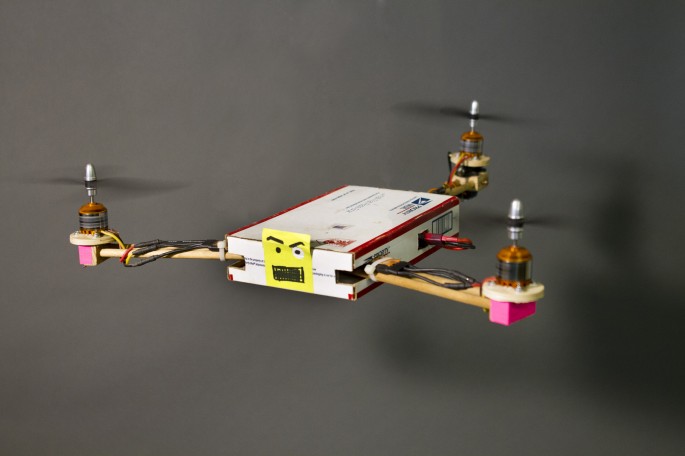
Recently I’ve become interested in the R/C FPV scene and all things multirotor. My ongoing project for the last few months has been a DIY tricopter multirotor that I fly FPV with. The tricopter I’ve built has been through more iterations than any other project I’ve done and has been great fun! I’m always trying to improve it’s flight characteristics and range and most recently that has meant swapping out my Hitec 2.4Ghz controls for a UHF Long Range System.
Before doing this my controls was the limiting factor on range, the 1000mW video link I use can go much further, so that started the hunt for a low cost UHF LRS I could use with my existing Hitec Aurora 9 transmitter. The lowest cost LRS I could find was the Orange RX OpenLRS combo that’s sold on HobbyKing.com. For US$50 you can get a transmitter and receiver based on the OpenLRS hardware, but unfortunitly the transmitter module is not made for Hitec and is way too big to fit.
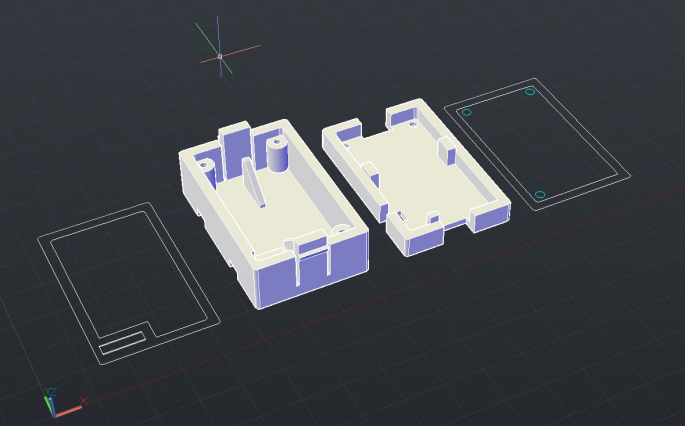
That’s where the AutoCAD model above, and a 3d printer comes in! I created a model of my existing 2.4Ghz transmitter module so that I could remotely connect it to the OrangeRX OpenLRS transmitter from HobbyKing. This new printed module snaps in to the back of the Aurora 9.
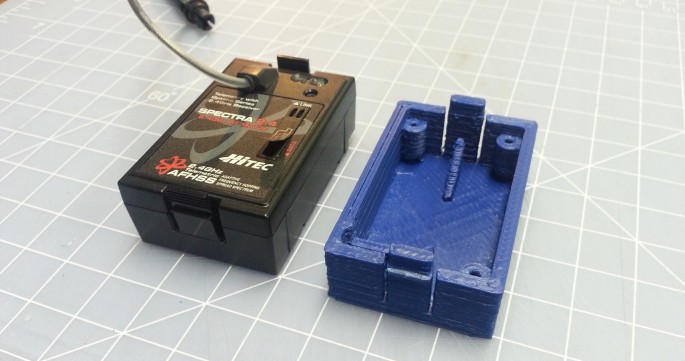
Here’s the module with the lid